-
Quinolin-4-ones: Synthesis Methods and Their Role in Modern Medicine
Quinolin-4-ones are remarkable heterocyclic compounds that have quietly revolutionized medicine over the past four decades. You might not have heard of them by name, but if you’ve ever taken ciprofloxacin for a urinary tract infection or norfloxacin for traveler’s diarrhea, you’ve already benefited from this class of compounds. Beyond their well-established role as antibiotics, researchers are now uncovering their surprising potential in cancer treatment, antiviral therapy, and beyond. What Exactly Are Quinolin-4-ones? Think of quinolin-4-ones as molecular workhorses. These nitrogen-containing heterocyclic compounds occur naturally in certain plants like those in the Rutaceae family, where they serve as chemical defenses against bacteria and fungi. Scientists first synthesized them in the late…
-
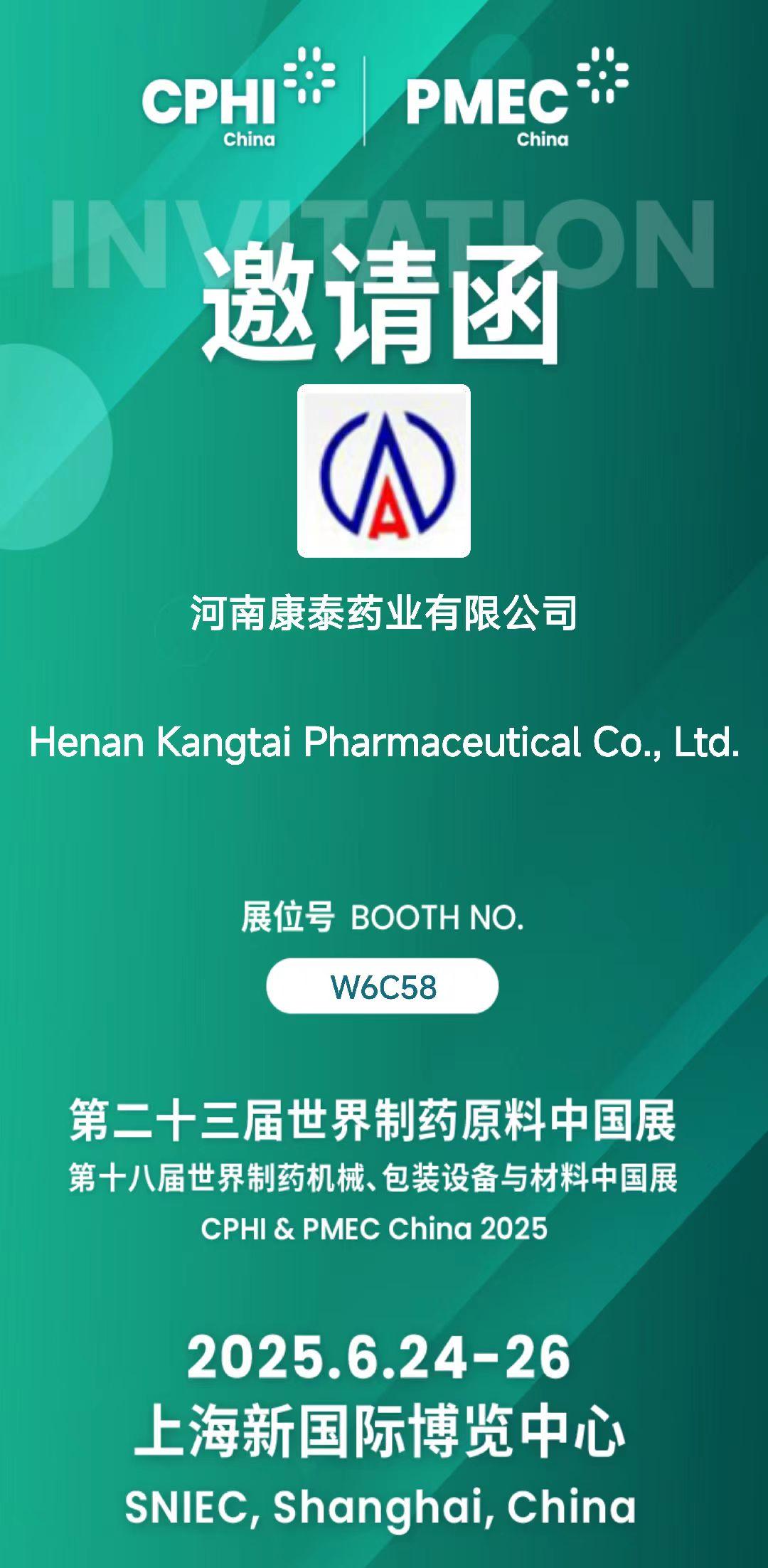
CPHI China 2025: Henan Kangtai Pharmaceutical Co., Ltd. Invites You to Booth W6C58
Shanghai, China – As the global pharmaceutical community gears up for one of Asia’s most significant industry events, Henan Kangtai Pharmaceutical Co., Ltd. is pleased to announce its participation in CPHI China 2025. The company will be showcasing its latest innovations and high-quality active pharmaceutical ingredients (APIs) from June 24th to 26th at the Shanghai New International Expo Centre. Industry professionals are invited to connect with the Kangtai Pharmaceutical team at Booth No. W6C58. For over two decades, Henan Kangtai Pharmaceutical Co., Ltd. has established itself as a reputable manufacturer and supplier of specialized APIs, with a strong focus on the development and production of quinolone antimicrobial agents. The company’s…
-
Norfloxacin API
1. Product name: NORFLOXACIN 2. Uses: This product is a third-generation quinolone antibacterial drug, the main site of action is the DNA gyrase of bacteria, which makes the bacterial DNA helix cracked. It quickly inhibits the growth and reproduction of bacteria, kills bacteria, and has a strong osmotic effect on the cell wall, so its bactericidal effect is stronger. It has high antibacterial activity against gram-negative bacteria such as Escherichia coli, dysentery bacillus, Proteus, and Pseudomonas aeruginosa, and also has good antibacterial effect on gram-positive bacteria such as staphylococcus and pneumococcus. 3. Molecular Formula, Molecular Weight, Chemical Structure: Molecular Formula: C16H18FN3O3MW: 319.3349Chemical Structure: This product is a white to light yellow…
-
The Indispensable Role of Ethyl Chloro Fluoro Quinoline in Medical and Technological Advances
Ethyl 7-chloro-6-fluoro-1-ethyl-1,4-dihydro-4-oxoquinoline-3-carboxylic acid borate, succinctly referred to as chelate, stands as a cornerstone in the pharmaceutical industry, particularly in the field of antibacterial medication. This noteworthy compound plays a central role as a raw material for the synthesis of quinolone drugs, including popular antibiotics such as norfloxacin and pefloxacin. Its extraordinary chemical properties endow these drugs with their potent antibacterial nature, making them highly effective in the fight against a diverse array of bacterial infections. The significance of chelate extends beyond its medical applications; it has also proven to be a pivotal element in the development of cutting-edge liquid crystal materials. The evolving technology sector, striving towards creating better displays…
-
Norfloxacin: What You Need to Know About This Common Antibiotic
Recently, many patients have expressed doubts about the main therapeutic effect of norfloxacin. Is its main function to treat diarrhea or urinary tract infection? Norfloxacin is a conventional therapeutic drug, which can treat diarrhea of various causes, and also has a good therapeutic effect on urinary tract infection and simple gonococcal urethritis. Similarly, for diarrhea, you need to take about 3~4 capsules each time, and for various urinary tract infections, you need to take 4 capsules each time. 1. Whether you can take norfloxacin after urinary tract infection needs to be discussed according to the situation, as follows : 1. Yes : Gram-negative bacteria are the most common bacteria in…
-
How to Use Norfloxacin Correctly: A Guide for Patients
Norfloxacin is what we often call kangtainorflo. It is a quinolone antibacterial drug. It has a high usage rate in our daily life and there are many unreasonable usage phenomena. So how to use it correctly? Indications and dosage intestinal infection : 0.3-0.4g (3-4 capsules) each time, twice a day, and the course of treatment is 5-7 days. Other types of infections : Acute simple lower urinary tract infection caused by Escherichia coli, Klebsiella pneumoniae and Proteus mirabilis: 0.4g (4 capsules) once, twice a day, for 3 days. Simple urinary tract infection caused by other pathogenic bacteria: the dose is the same as above, and the course of treatment is…
-
Norfloxacin Nicotinate: A Water-Soluble Derivative of Norfloxacin
Norfloxacin nicotinate is a water-soluble derivative of the antibiotic norfloxacin. It is used to treat a variety of bacterial infections, including urinary tract infections, respiratory infections, and skin infections. Norfloxacin nicotinate is more water-soluble than norfloxacin, which makes it easier to absorb and distribute throughout the body. This also means that norfloxacin nicotinate can be taken in a smaller dose than norfloxacin, which can reduce the risk of side effects. Norfloxacin nicotinate is available as a tablet, capsule, or injectable solution. The dosage and frequency of administration will vary depending on the type of infection being treated. Norfloxacin nicotinate is generally well-tolerated, but some common side effects may include nausea,…
-
1-Ethyl-7-(1-piperazinyl)-6-fluoro-1,4-dihydro-4-oxo-3-quinolinecarboxylic acid hydrochloride: A Key Raw Material in the Synthesis of Quinolone Antibiotics
Quinolone antibiotics are a class of drugs that are used to treat a variety of bacterial infections. They are effective against a wide range of bacteria, including gram-positive and gram-negative bacteria. Quinolone antibiotics work by inhibiting the activity of DNA gyrase, an enzyme that is essential for bacterial DNA replication. 1-Ethyl-7-(1-piperazinyl)-6-fluoro-1,4-dihydro-4-oxo-3-quinolinecarboxylic acid hydrochloride is a key raw material in the synthesis of quinolone antibiotics. This compound is a white to off-white powder with a molecular weight of 331.33 g/mol. It is soluble in water and ethanol. Synthesis: The synthesis of 1-Ethyl-7-(1-piperazinyl)-6-fluoro-1,4-dihydro-4-oxo-3-quinolinecarboxylic acid hydrochloride can be carried out in a number of ways. One common method is to start with 4-fluoro-3-(1H-pyrrol-1-yl)aniline…
-
Why the New USP Deleted Norfloxacin?
The United States Pharmacopeia (USP) recently deleted Norfloxacin, an antibiotic, from its list of approved drugs. This decision was made after a review of the drug’s safety and efficacy data. Norfloxacin was first approved by the FDA in 1986. It is used to treat a variety of infections, including urinary tract infections, prostatitis, and traveler’s diarrhea. However, Norfloxacin has been linked to a number of serious side effects, including tendonitis, nerve damage, and liver damage. In 2018, the FDA issued a safety warning about Norfloxacin, stating that the drug should not be used for more than 14 days. The FDA also warned that Norfloxacin should not be used in patients…
-
Norfloxacin: A Powerful Antibiotic for UTI and Bacterial Infections
Norfloxacin is a type of antibiotic that belongs to the quinolone class. It is used to treat various bacterial infections, especially urinary tract infections (UTIs). UTIs are common and can cause symptoms such as inflammation, pain, fever, chills, burning sensation when urinating, frequent urination, cloudy or bloody urine, pain in the lower back or abdomen, nausea and vomiting, and diarrhea. If left untreated, UTIs can lead to serious complications such as kidney damage or sepsis. Norfloxacin works by inhibiting the DNA synthesis of bacteria, preventing them from multiplying and spreading. It is effective against a wide range of bacteria, including E. coli, Klebsiella, Proteus, Enterobacter, Pseudomonas, and Staphylococcus. Norfloxacin can…

Focusing on quinolone antibiotics for 30 years, a specialized manufacturer of Norfloxacin API