-
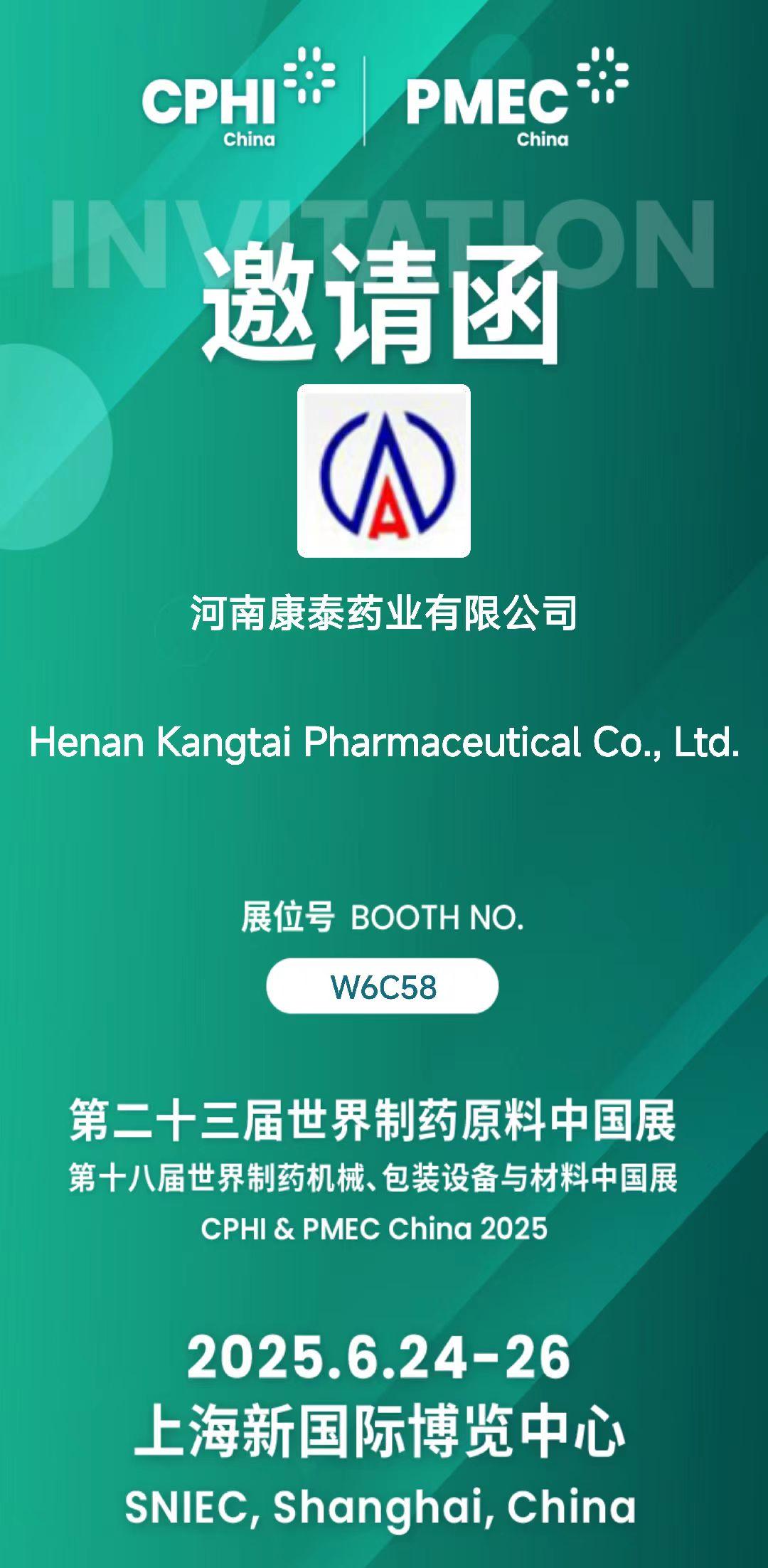
CPHI China 2025: Henan Kangtai Pharmaceutical Co., Ltd. Invites You to Booth W6C58
Shanghai, China – As the global pharmaceutical community gears up for one of Asia’s most significant industry events, Henan Kangtai Pharmaceutical Co., Ltd. is pleased to announce its participation in CPHI China 2025. The company will be showcasing its latest innovations and high-quality active pharmaceutical ingredients (APIs) from June 24th to 26th at the Shanghai New International Expo Centre. Industry professionals are invited to connect with the Kangtai Pharmaceutical team at Booth No. W6C58. For over two decades, Henan Kangtai Pharmaceutical Co., Ltd. has established itself as a reputable manufacturer and supplier of specialized APIs, with a strong focus on the development and production of quinolone antimicrobial agents. The company’s…
-
Quinolone Antibiotics and the Risk of QT Interval Prolongation: A Matter of Heart
In the world of modern medicine, antibiotics are hailed as lifesavers, warding off bacterial infections and safeguarding our health. Among them, quinolone antibiotics, including norfloxacin and moxifloxacin, are widely used due to their broad-spectrum antibacterial activity. However, their potential side effect of QT interval prolongation, leading to an increased risk of cardiac arrhythmias, has been a subject of growing concern among medical professionals and patients alike. The QT interval on an electrocardiogram (ECG) represents the time the heart’s ventricles take to depolarize and repolarize – in layman’s terms, to contract and relax. Prolongation of the QT interval is a serious condition as it can lead to a potentially fatal form…
-
Revolutionary Advancements in Antibiotic Synthesis: A Leap Towards Efficient Drug Production
In the rapidly evolving world of pharmaceuticals, the quest for more efficient, cost-effective, and versatile drug synthesis methods is a constant driver of innovation. One such innovation that has made a significant breakthrough in antibiotic production centers around Quinolone drugs. A recent study introduced a new strategy for synthesizing Quinolone antibiotics, drastically reducing the number of steps required and significantly increasing the reaction yield. This remarkable development not only holds potential for revolutionizing antibiotic production but also opens up the possibility for the development of new antimicrobial drugs. Quinolone antibiotics, a staple in the medical field, are renowned for their efficacy against a broad spectrum of bacterial infections. However, the…
-
Quinolones: A Powerful Ally in the Battle Against Microbes
The world of pharmaceuticals is a constant battlefield. At the front lines of this battle, standing as powerful soldiers against the onslaught of microbial infections, are Quinolones. These antimicrobial agents have established themselves as formidable tools in the fight against bacterial infections. However, like all powerful tools, they must be handled with caution and understanding. Quinolones are classified into four generations, each with its unique spectrum of antimicrobial activity and potency. Their mechanism of action involves interference with key bacterial enzymes, resulting in bacterial death. This broad-spectrum antimicrobial activity and potent antibacterial effect have made Quinolones a preferred choice for treating a wide array of infections. One of the significant…
-
1-Ethyl-7-(1-piperazinyl)-6-fluoro-1,4-dihydro-4-oxo-3-quinolinecarboxylic acid hydrochloride: A Key Raw Material in the Synthesis of Quinolone Antibiotics
Quinolone antibiotics are a class of drugs that are used to treat a variety of bacterial infections. They are effective against a wide range of bacteria, including gram-positive and gram-negative bacteria. Quinolone antibiotics work by inhibiting the activity of DNA gyrase, an enzyme that is essential for bacterial DNA replication. 1-Ethyl-7-(1-piperazinyl)-6-fluoro-1,4-dihydro-4-oxo-3-quinolinecarboxylic acid hydrochloride is a key raw material in the synthesis of quinolone antibiotics. This compound is a white to off-white powder with a molecular weight of 331.33 g/mol. It is soluble in water and ethanol. Synthesis: The synthesis of 1-Ethyl-7-(1-piperazinyl)-6-fluoro-1,4-dihydro-4-oxo-3-quinolinecarboxylic acid hydrochloride can be carried out in a number of ways. One common method is to start with 4-fluoro-3-(1H-pyrrol-1-yl)aniline…

Focusing on quinolone antibiotics for 30 years, a specialized manufacturer of Norfloxacin API